Kia Optima DL3: Rear Suspension System / Rear Lower Arm
Repair procedures
| Removal |
| 1. |
Disconnect the (-) battery terminal. |
| 2. |
Remove the rear wheel and tire. (Refer to Tires/Wheels - "Wheel") |
| 3. |
Loosen the bolt and nut (A) and then remove the rear lower arm from the rear axle.
|

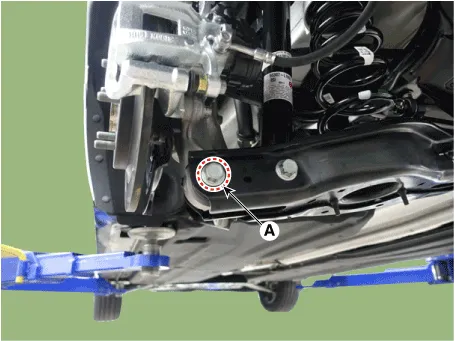
| 4. |
Loosen the bolt and nut (A) and remove the rear shock absorber from the rear lower arm.
|
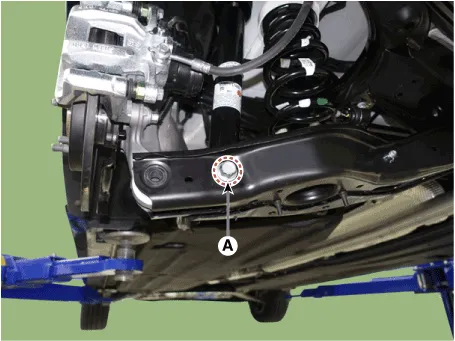
| 5. |
Loosen the bolt and nut (A) and then disconnect the rear stabilizer link from the rear lower arm.
|
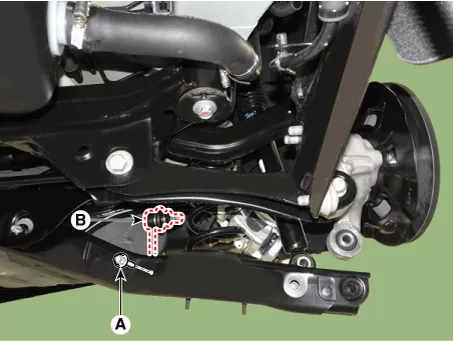
| 6. |
Remove the rear coil spring (A).
|
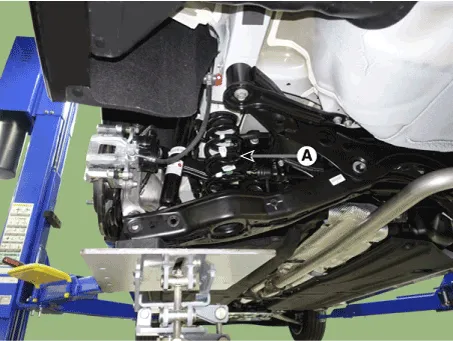
| 7. |
Loosen the bolt and nut and then remove the rear lower arm (A).
|
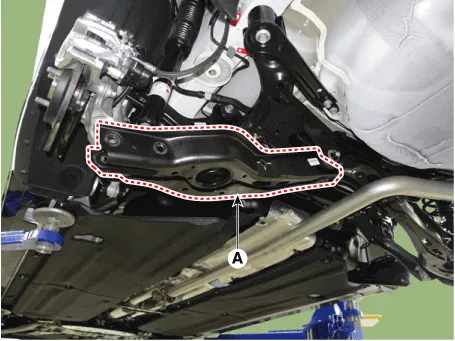
| Inspection |
| 1. |
Check the bushing for wear and deterioration. |
| 2. |
Check the rear lower arm for deformation. |
| 3. |
Check the coil spring and spring pad for deterioration and deformation. |
| 4. |
Check for all bolts and nut. |
| Installation |
| 1. |
Install in the reverse order of removal. |
| 2. |
Check the alignment. (Refer to Suspension System - "Alingment") |
Repair procedures Removal 1. Disconnect the (-) battery terminal. 2. Remove the rear wheel and tire.
Repair procedures Removal 1. Disconnect the (-) battery terminal. 2. Remove the rear wheel and tire.
Other information:
Kia Optima DL3 2019-2026 Service and Repair Manual: Multifunction Switch
Specifications Specifications Items Specifications Rated voltage Front fog lamp switch 5 V Lighting Auto lighting Dimmer & Passing Turn signal lamp Wiper Was
Kia Optima DL3 2019-2026 Service and Repair Manual: Intake Actuator
Components and components location Components Location 1. Intake actuator Description and operation Description The intake actuator is located at the blower unit. It regulates the intake door by a signal from the control unit.
Categories
- Manuals Home
- Kia Optima Owners Manual
- Kia Optima Service Manual
- Headlamps
- Heating, Ventilation and Air Conditioning
- Floor Console Assembly
- New on site
- Most important about car
